Glad to discuss them, can you post the explanations you mean?
I would say at least the honeycreepers have the same body plan. It does become more difficult when we talk about all birds, or all mammals. So we have to try to agree on a specific definition, as best we can. Body plan is indeed a concept in biology! So people have some idea of what that means, hard though it be to come to brass tacks.
I do claim that posting a counterexample implies some agreement to the validity of the challenge. And are you saying Bechly was not a qualified paleontologist?
Hmm, it’s kind of difficult to do a search on this, the search results are mostly about the new Jurassic World movie! But Wikipedia, in its “Jurassic” article, notes:
”On land, the fauna transitioned from the Triassic fauna, dominated jointly by dinosauromorph and pseudosuchianarchosaurs, to one dominated by dinosaurs alone. The first stem-group birds appeared during the Jurassic, evolving from a branch of theropod dinosaurs. Other major events include the appearance of the earliest crabs and modern frogs, salamanders and lizards. Mammaliaformes, one of the few cynodont lineages to survive the end of the Triassic, continued to diversify throughout the period, with the Jurassic seeing the emergence of the first crown groupmammals.”
Um, if you reject Bechly’s reasoning, as Faizal_Ali and others did here, presumably you have examined it. But here is Bechly’s response, and a summary says “If chimps and humans really did evolve from a common ancestor, why do they appear to be the lone exception to this pattern of modern species pairs differing in only trivial ways? Bechly notes that whatever one’s explanation, there appears to be clear evidence here of human exceptionalism. He and Luskin go on to cast doubt on the idea that mindless evolutionary processes could have engineered the suite of changes necessary to convert an ape ancestor into upright walking, talking, technology-fashioning human beings.”
So this would be arguing that chimps and humans do not have a common ancestor, though I would also say they do not seem to have different body plans. And thus are not a good counterexample.
So what was his reasoning? That summary does not provide a description.
And, please, do not misrepresent my position. I do not reject his reasoning. I conclude that he had no reasoning, just blithe dismissals and handwaving. And, so far, you have provided nothing to suggest otherwise. Just your utter conviction that he has reasoning. Of course, it is by now clear that you lack the ability to comprehend anything beyond the most elementary scientific writing, so your conviction isn’t really worth much. Oh, look. Here’s yet another illustration of your comprehension problem:
No, it would be arguing nothing of the sort. Bechly accepts common ancestry. (OTOH, I am not convinced even Luskin knows that Luskin thinks).
BTW, when can I expect you to answer the questions I posed here:
Yes, my example illustrates why people would tend to do that. Saying “I measured a number of variants for levels of fitness, and I can’t give you any conclusions” is not very useful.
I didn’t say vibes were a form of evidence, though! I did point to historical evidence as one form, though, which does not involve measurements. Do you not believe in Alexander the Great? This is not some sort of emotional appeal.
I’m going to pose the same question to you I posed to John.
Are differing levels of melanin production in humans and resulting levels of skin pigmentation functionally different depending on a given environment those humans are in?
Well, of course it is. To take a simple example, hemoglobin-s is functional in an environment containing malaria, but non-functional (or less functional than normal hemoglobin) in its absence.
Yes. We are operating off different definitions of function here. Your definition is “does something”, which in your example is “results in the production of melanin”. I realize that “something” may also be difficult to define. Transcription, presumably, isn’t “something”. Translation isn’t necessarily “something”, since nonsense translation exists.
I’m sorry I said you most probably had examined his reasoning. I’m also sorry you apparently disclaim doing that, and yet you reject his conclusions. That’s, well, “blithe dismissals and handwaving.”
Well, a statement that “If chimps and humans really did evolve from a common ancestor, why do they appear to be the lone exception to this pattern of modern species pairs differing in only trivial ways?” does appear to disagree with the conclusion of common ancestry. Then I note this description of his view: “In this exchange, Günter spotlights some problems the fossil record poses for Darwinism and, specifically, the theory’s idea of universal common ancestry.” You may be confusing Bechly with Michael Behe, who does subscribe to common ancestry.
This is completely speculation, you’re giving numbers out of thin air, this analogy is not apt, either. A wooden crate is not a valid alternative to a scale, and I have tried to show that Axe’s use of bacteria is a valid option for evaluating function.
“Historical evidence” is not a form of evidence. Though I’ll leave it to present historians to articulate how much or how little offense they take to you suggesting that measurement is a secondary, if any, way by which they gather evidence in their field.
I do not believe in his relevance to discussing how very measurable quantities like fitness or function are related.
Yes, it is. You said that I wouldn’t know much of importance merely because I suggest that a rational interlocutor wouldn’t be swayed on matters of biology without data. You said that, because you were hoping that my desire to know much of importance (an emotion) would push me to reconsider the correctness of my observation. You were literally making an appeal to my emotions. Your discomfort with that does not change what it was.
I would prefer that you start, especially since you brought it up.
Why? And what birds, if any, have a different body plan? Further, do any non-avian theropods have the same body plan as any birds? See how that’s a problem?
Sorry, but in so far as it’s a concept in biology, it’s according to the definition you previously quoted, in which different animal phyla share different body plans. Thus there’s a vertebrate body plan shared by Hawaiian honeycreepers, whales, lampreys, etc. That’s obviously not what Bechly is talking about.
No, that just doesn’t follow. Do you understand the idea of assuming for the sake of argument?
Sure he was. But that doesn’t mean he wasn’t wrong, and you can’t hide behind his qualifications. Consider all the qualified paleontologists who disagree with him. Why aren’t you hiding behind them?
Great. Now how many of those are new body plans, and how many of them arose during a period of 5-10 million years from an old body plan? For example, how does the body plan of Archaeopteryx differ from that of other maniraptorans in such a way as to make it new? Do modern birds have a different body plan from Archaeopteryx, or is it the same one? You have to do more than just cut and paste here. You have to make a clear statement of a conclusion that follows from clearly stated evidence.
Whose summary? Please stop using chatbots, especially without noting that fact. What does it have to do with Bechly’s reason for rejecting humans as a counterexample? Because I don’t see any such reason mentioned.
It argues no such thing. It argues that “mindless evolutionary processes” were not responsible for the changes involved. Bechly’s notion is saltation ordained by Jesus.
Perhaps that’s what you would say. But what does Bechly say? Did you even read what he said when you got the chatbot to answer for you?
As has been pointed out, this has no relevance to either fitness or function. “Useful” is a whole nother thing; and in passing I doubt you can show a binary decision even for that.
I admit, I am not very well-acquainted with Bechly’s views in detail. That said, I do recall a more detailed discussion of his views that could only conclude that they were confused and inconsistent.
Well, sure. It’s an imaginary scenario, so I am free to use whatever numbers are sufficient to illustrate the point.
It is, to the extent that an obese person is more likely to break it than someone who is not obese.
The relevant question, of course, is whether it is as sensitive a measure as the BMI in terms of detecting obesity. (It isn’t.)
And, similarly, in Axe’s case the relevant question is whether seeing if bacteria grow on a plate treated with antibiotic is as sensitive a measure of enzyme activity as is a direct assay. (It isn’t.)
IOW, the analogy is perfectly apt. You just didn’t understand it. So it goes.
Sadly, you have to listen to the podcast in order find out if that description is accurate. One should not take anything the DI says at face value. Instead, you might try reading what Bechly actually wrote on his own web site, https://www.bechly.at/anti-darwinism-1/
“I am convinced that the evidence strongly points towards a combination of old earth and common ancestry with saltational development.” There’s lots more, most of it insane, but that’s the crucial bit.
Well it is certainly an open question what the “pass rate” of the wild type TEM-1 enzyme would have been, close to it’s MIC of 5200 ug/ml.
What is not remotely in question is whether wild type TEM-1 would have had a higher pass rate at 10 ug/ml ampicillin (just below the 20 ug/ml ampicillin MIC of the temperature sensitive enzyme). It would.
Axe gives his analogy, suggesting that had we used fragments of the wild TEM-1 to test for pass rate at the temp-sensitive MIC, we would have obtained a skewed result that would have implied the enzyme could tolerate more total mutations than it actually could in practice.
It is not clear that would be true for the actual enzyme, as protein sequences have a sort of buffering capacity that parts of sentences do not. If there are misspellings in words in a sentence, it’s not at all clear that correct spellings of later words in the sentence can somehow compensate for the loss of meaning of the words that were misspelled. But that is in fact known to be true of protein sequences, where quite distal residues can buffer the effect of others.
But he claims he set his experiment up to “favor Darwinism” by setting his minimal constraints for functionality as he did. With that, Axe seems to suggest (it’s not actually clear whether this is the scenario he has in mind) that TEM-1 would have measured a lower (<38% per position) pass rate of mutants close to the TEM-1 MIC of 5200 ug/ml, than the temperature enzyme did close to the temp-sensitive MIC of 20 ug/ml.
That suggestion is, l as far as I can tell, completely baseless. And that is the most generous possible interpretation I can give Axe.
Okay, I can buy into a definition where biological function is environmentally dependent and thus effectively transient. I’m curious as to whether lee would agree to this.
@lee_merrill do you accept a definition of function that is dependent on the environment?
Seeing as this topic is still active, I thought I would provide a response, here in this thread, to the article@lee_merrill thinks refutes my 2007 essay. I would ask @lee_merrill to read and make reference to my essay - without this, my response and most of this discussion won’t make much sense.
First and foremost, Points 1, 2, and 4 in Axe’s essay refer to criticisms made by others and are not to be found in my essay. Point 3 is the only one that touches on my essay, and Axe’s discussion completely avoids the point. This point is explained (with reference to my original essay) in the following.
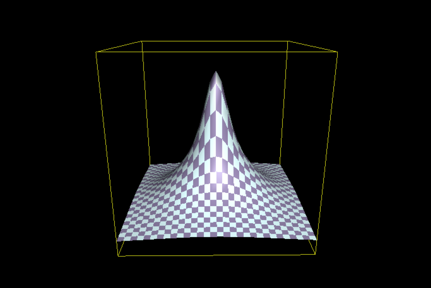
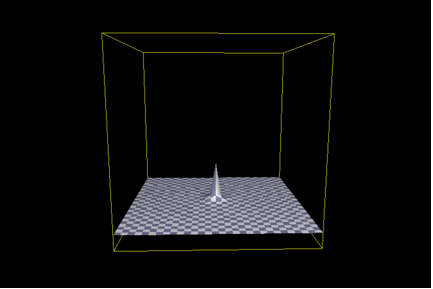
The crux of my essay can be gleaned from the first 3 figures in the essay. My main point - that remains unanswered by Axe TO THIS DAY! - is that Axe assumes an equivalence in the bases of the hills depicted in Fig. 1 and Fig. 3. The base of the hill in Fig. 3 is the parameter Axe purports to measure, while the base of the hill in Fig. 1 is the parameter that relates to the frequency of protein function in sequence space. In order for Axe’s results to be relevant, it is necessary either that: the bases of the hills shown in Figs. 1 and 3 are equivalent, OR that Axe provides an experimentally-supported conversion factor that allows us to relate the bases of these two hills. Axe has never done either, nor has he responded in any way this main aspect of my criticism (depicted in Figs. 1, 2, and 3 of my essay). Not in the essay you cite, @lee_merrill, nor anywhere else.
Also, needless to say, Axe has never responded to the much more recent revelations (discussed in this thread and elsewhere) that Axe’s methods for assessing beta-lactamase activity do not reliably distinguish between variants with low activity and controls that are devoid of activity. We do have a discussion on PS that relates to this. Scroll down to entry 21 of this thread, and then follow Gauger’s attempt to explain away this flaw. Bottom line - she doesn’t, but she makes other curious statements that seem to give away the store. Enjoy this stroll down memory lane!
Just because mutations of type A are more prevalent in evolution than mutations of type B, that doesn’t mean mutations of type B can be ignored when assessing the probability of evolving new functional genes.
Consider the logic of the following scenario (these numbers are made up, and it’s very back of the envelope, but the purpose is to illustrate your falty logic):
Suppose that mutations of type A (base substitutions resulting in amino acid substitutions) occur 10 times more frequently than mutations of type B (insertions/deletions resulting in gene fusions).
That means every time 10 type-A mutations have happened, one type-B mutation has happened. 10:1 in favor of type A.
Different functional proteins are, on average, separated by 100 “steps” (amino acid differences) in protein sequence space.
When using mutations of type A we can only move one “step” in protein sequence space at a time, so it would take, on average, 100/1 = 100 such mutations to accumulate before we find a single new functional protein.
When using mutations of type B we can move 50 steps in one mutation. So it would take, on average, just 100/50 = 2 such mutations to find a new functional protein.
An organism that undergoes 1000 type-A mutations will therefore, on average, find 1000/100 = 10 new proteins with those, and in the same time suffer 100 type-B mutation, but find 100/2 = 50 new proteins with those.
More succinctly: A is 10x more likely to occur than B. But when B does occur it is 50x more likely than A to produce a new functional protein.
That’s just one reason why what you’re saying doesn’t make sense.
Another is Axe didn’t even study the probability of finding new functional proteins using specific types of mutations. And he’s not using evolution in his experiments. No evolution occurred in Axe’s experiments at all. He’s not testing “the probability of finding a new protein sequence using a specific type of mutation.” This just isn’t what he’s doing at all.
Axe purports to give an estimate of the fraction of protein sequence space that has functional proteins by trying to estimate how sensitive a functional protein is to mutation, and from this try to calculate the fraction by an extrapolation. He estimates that number to be about 10-77 (meaning there is one functional protein in every 1077 protein sequences. He concludes that this means functional proteins are too rare for evolution to discover by random blind sampling into protein sequence space (some estimates are that evolution could have sampled at most about 1050 different protein sequences in the entire history of life on Earth. If those numbers were correct, the probability that evolution could have found even one single new protein, if it was completely blindly sampling randomly into sequence space, would be about 1 in 1027. The bet is no new proteins could have evolved then.
Meanwhile, in actual laboratory experiments using evolution, gene-gene fusions occur so frequently that new functional proteins have evolved in a matter of weeks. In those experiments, many more DNA base substitutions occurred than insertions/deletions. But despite the substitutions significantly outnumbering insertions/deletions, the insertions/deletions still produced new functional genes. Therefore Axe’s result is unable to show a problem for evolution.
If Axe’s result was truly generalizable to protein sequence space (if proteins really were both as rare as he extrapolates, and as isolated from each other as he argues, and if protein sequence space could only be probed by blindly and randomly sampling it through completely start-over de novo sequence generation), then a new protein should not have been possible to evolve in those experiments. But since new proteins evolved, one or more of Axe’s assumptions must be wrong.
So it’s appropriate to set a threshold for function, and measure what passes, and what does not. You do have to pick an appropriate threshold, but then you get a conclusion, too, by doing this.
People do investigate historical evidence, when they want to evaluate whether such a person existed or whether an event happened.
No, I’m saying there are some things, even in biology, that cannot be established by measurement. Such as the field of comparative anatomy. But I also realized that the claim that “the only statements that can be believed are those that are established by measurement,” is self-defeating. this claim cannot be established by measurement! So if it’s true, it’s false.
Generally, there is a punt when the offense gives up.
Um, because they’re obviously all birds? How is this disputable? And maybe penguins could arguably have a different body plan than birds that fly in the air.
I’m not seeing how this has any bearing on whether honeycreepers have the same body plan.
Lampreys? That’s a different body plan than honeycreepers, for sure, and yes, it does seem Bechly would agree.
So why didn’t they just correct Bechly’s explanation of a body plan, instead of posting counterexamples?
Well, they didn’t seem to disagree with Bechly on the definition of a body plan, and Bechly responded to their counterexamples. I think that indicates that he arguably won his challenge.
I don’t think this commits him to universal common ancestry, though, for he also writes “All macroevolutionary transitions happened abruptly and required a flow (or ‘downloading’) of information from outside of the system.” So common ancestry, in this sense: “I definitely do affirm that every organism (apart from the first living cell) was produced / born from a biological parent organism and thus did not pop into being ex nihilo.”