Sigh. If I ask why you believe that folded rocks suggest rapid deposition and rapid folding, will you answer with any kind of detail or just continue your gish gallop?
Then you should put some effort into providing details and responding to critiques. If I was designing a curriculum, I’d want to have all my arguments reviewed systematically, but you seem more interested in just throwing out as many as possible with little regard for what we have to say.
I was being entirely sincere. I don’t think you’ve taken the time to sit down and learn basic geology, and instead you rely on secondary (creationist) sources telling you “geology can’t explain this”. For your own sake, if not the sake of your students, I’d advise that you study the subject yourself.
Yes it was. If it had bee 250 million years old, rRNA analysis would have shown that.
We know life is old for other reasons, not because of assumptions. It is those other reasons that allow us to use rRNA analysis as a test of age. That analysis says it is a modern contaminant. Since contamination is extremely easy and common, it is on balance incredibly much more likely to be a contaminant(as in it is incredibly much more likely that the authors are just plain wrong when they INSIST INTENSELY that their salt crystal could not have recrystallized over the course of 250 million years), than it is all the independent methods for dating are all wrong about life and Earth’s age.
This is how the reasoning works. It’s not circular. There are no assumptions, there is other kinds of evidence that can’t just be dismissed, and in light of which another explanations is much more likely.
In order to really establish that this life is actually young, you’d need an enormous amount of evidence to overturn all the other independent lines already collected. If you have a mountain of evidence for X, and one putative piece of evidence for Y while also having a perfectly reasonable explanation for how you can obtain Y with X being true, then that single piece of evidence for Y simply doesn’t have the power to overturn X.
You’d need to collect just as many pieces of evidence for Y as there is for X to even begin casting doubt on X, and you’d need to keep collecting more and more evidence for Y to change odds over to be strongly in favor of Y. There should be mountains of evidence for Y all of which would have to be extremely robust.
Unanswered questions on X aren’t automatically evidence for Y, and weak evidence for X isn’t evidence for Y.
Your handful of tropes, such as Amino acid racemization, and Faint Young Sun paradox isn’t evidence for Y. They’re at best just not evidence for X. To be evidence for Y, you need Y to make specific testable predictions. What does Y say we should expect to find about amino acid racemization? Well if Life and Earth is 6000 years old, then amino acid racemization should all bottom out at 6000 years.
They don’t. So amino acid racemization isn’t evidence for Y, at best it’s just bad and unreliable evidence for X.
What does Y say about the Faint Young Sun paradox if the solar system is 6000 years old? Well, it doesn’t say anything really. The solar system being 6000 years old makes no predictions about what stage in the Sun’s evolutionary stages it was created. So it can’t be evidence for Y.
And so on ad infinitum. All your arguments are bad. None of them amount to evidence that Earth or life is young, at best you’re just showing that some particular questions are unanswered or fail to constitute evidence for an old Earth/life/solar system.
2 Likes
Those tektites you are hoping in are simply burnt material ejected from the asteroid hit. They do not have an internal clock that has been reset, or one that can be trusted to date anything but the very old material that already existed in the earth’s crust.
Ditto that remark. All I have seen in about 20 - 25 responses from these guys is pure noise. Hey guys, how about some real science to back up your noise.
I think your principle is a cobbled-together graph or picture from several different sites around the globe. Please include one here where fossiliferous layers stacked neatly in a single location are shown to be sandwiched in-between undisturbed lava flows. That would help us in having a meaningful conversation.
Oh, and by the way, no one has ever successfully answered the question of why an authentic scientist, for instance, a paleontologist, would not be eager to carbon date any kind of soft tissue find in any fossil found, no matter how old it was construed to be. That is, unless circular reasoning, or a priori assumptions, or fear of funding cuts were at play.
Isn’t that a responsibility of a real scientist? To investigate every find to the fullest? Isn’t that what kids are taught in science to do?
Why are we not regularly carbon-dating soft tissue finds in fossils?
Are you saying that it’s invalid to build up a picture of the geologic column based on correlations of strata across long distances?
Well that’s trivial to do, here’s a random, recently-published example that you could have found with just a few minutes of googling:
https://pubs.geoscienceworld.org/gsa/geology/article/42/7/571/131590/
I should also point out that bracketing isn’t the only dating method available, there are also techniques that can be used on younger (but still ancient) timescales, such as 26Al/10Be that can date the very sediments remains/fossils are buried in. See this recent paper for an example: 26Al/10Be Burial Dating of the Middle Pleistocene Yiyuan Hominin Fossil Site, Shandong Province, Northern China | Scientific Reports
Here’s an example of dating sedimentary rocks (black shales), rather than igneous rocks, to produce a bracketed age for a fossil:
https://pubs.geoscienceworld.org/gsa/geology/article/46/2/135/524864/
1 Like
I just posted a paper above showing a cross correlation between Suigetsu varves and volcanic eruptions going back 150,000 years. Neither you nor Sal will touch it. Why is that?
1 Like
Yes they have. The answer, which really does successfully answer the question, is that the method doesn’t have the accuracy to determine the age of fossils if they are really old because the signal becomes indistinguishable from noise.
The numbers you get once it gets beyond a certain range become meaningless, you’re no longer measuring age. The background noise becomes so much greater than actual signal it can’t be distinguished.
Nothing circular about that.
Not true at all. Tektites are formed from molten material during impact. That’s why they’re round. They’re tiny little lava bombs. And I see you ignored all the other points about the impact.
The same reason scientists don’t go around trying to potassium-argon date literally every rock they pick up.
“Investigating every find to the fullest” does not mean “use literally every technique on literally every find”, for both technical and practical reasons.
2 Likes
The Moon is heavily cratered, and people from around the world have been observing continually. At no point in history do we have a record of a bombardment and massive crater formation. It’s always been that way. If the universe is 6500 years old, I think it’s safe to assume the moon was created with the illusion of having been bombarded.
I can’t see another explanation, Sal.
1 Like
How about this?
 https://naturalishistoria.files.wordpress.com/2012/11/tephra-suigetsu-varves-lake-chronology1.png
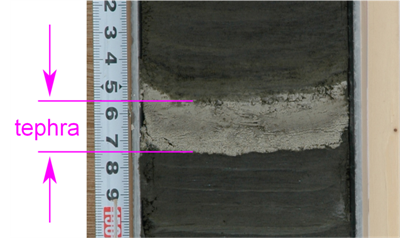
From here: Lake Varves, Volcanic Ash, and the Great Isaiah Scroll
2 Likes
I disagree. What if I said, “you’re embarassing yoruself, your’e not showing you bothered to think about the implications of what you studied.” That would be rude. Also the implication that I didn’t take a formal course doesn’t mean I haven’t studied the matter nor interacted with several professional geologists over the years.
But, again, we don’t have to agree or disagree on what is rude. We are in a dialogue, and if you give a point that has merit, and I think it deserves a response and I have energy to do so, I will. But I may put it on the bottom of the queue, especially if I sense you’re not giving weight to what I said either.
I could say, “study a little astrophysics and the problems of faint young sun paradox and stop embarassing yourself.” That would be rude. I’m just showing you how I perceive you and others are dealing with me. Or “study that permian basin diagram and exercise a little critical thinking before your respond because you’re embarrassing yourself.” I gave you a little hint of the problem by showing Pittman’s diagram on the problem of eroding smooth contact points.
This thread started because someone asked why I thought the fossil record is young. I give a laundry list or reasons I think why the evidence is overwhelming, and then someone else accuses me of gish galloping or ignoring their points. Fine, they don’t have to invest time responding at all.
FINALLY, if anyone wants to debate this or any other topic in a one-on-one in a live online debate, I’m willing to do it. I can’t reasonably respond to every querry and misrepresentation in a 10 against 1 free-for-all and then also lay out my case;
And seriously, AllenWinter didn’t properly appreciate the problem of the supposed ancient bacteria and instead called it a Trope and suggested only lay uneducated audiences would be persuaded by it. Not so. I didn’t treat him like you treated me by saying, “study a little more biology like the people whom I communicate with who, unlike you, are professors in that discipline, otherwise you’re embarrassing yourself.” I didn’t do that. I’m just showing you how I perceive your comments.
First, that’s not necessary. All that’s really needed to dispose of your claim is a lava flow above a fossiliferous layer, since the lava flow must be younger than the strata below it.
Second, I gave you several such examples in that paper about dating the Early Cambrian. There are three localities, but each one has more than one dated horizon.
what about a case of old DNA sequence without the result of contamination like this one?;
https://bsapubs.onlinelibrary.wiley.com/doi/full/10.3732/ajb.91.4.615
" The newly determined sequence was exactly the same as the sequence from GenBank. Thus, because the fossil sequence differs from all other sequences of Lauraceae reported to date, contamination seems highly unlikely."
What exactly do you think that this quote means?
that the DNA is indeed from the fossil. the problem is that DNA should not exist for so long time. at least according to this paper:
https://www.researchgate.net/publication/291781657_Biomolecules_in_fossil_remains